THE INVITATION GUIDE
Boxed wedding invitations.
A presentation to remember.
A box creates a different kind of reveal. Here’s how to choose the format around your invitation, rather than trying to fit your invitation into a format.
Explore the collections →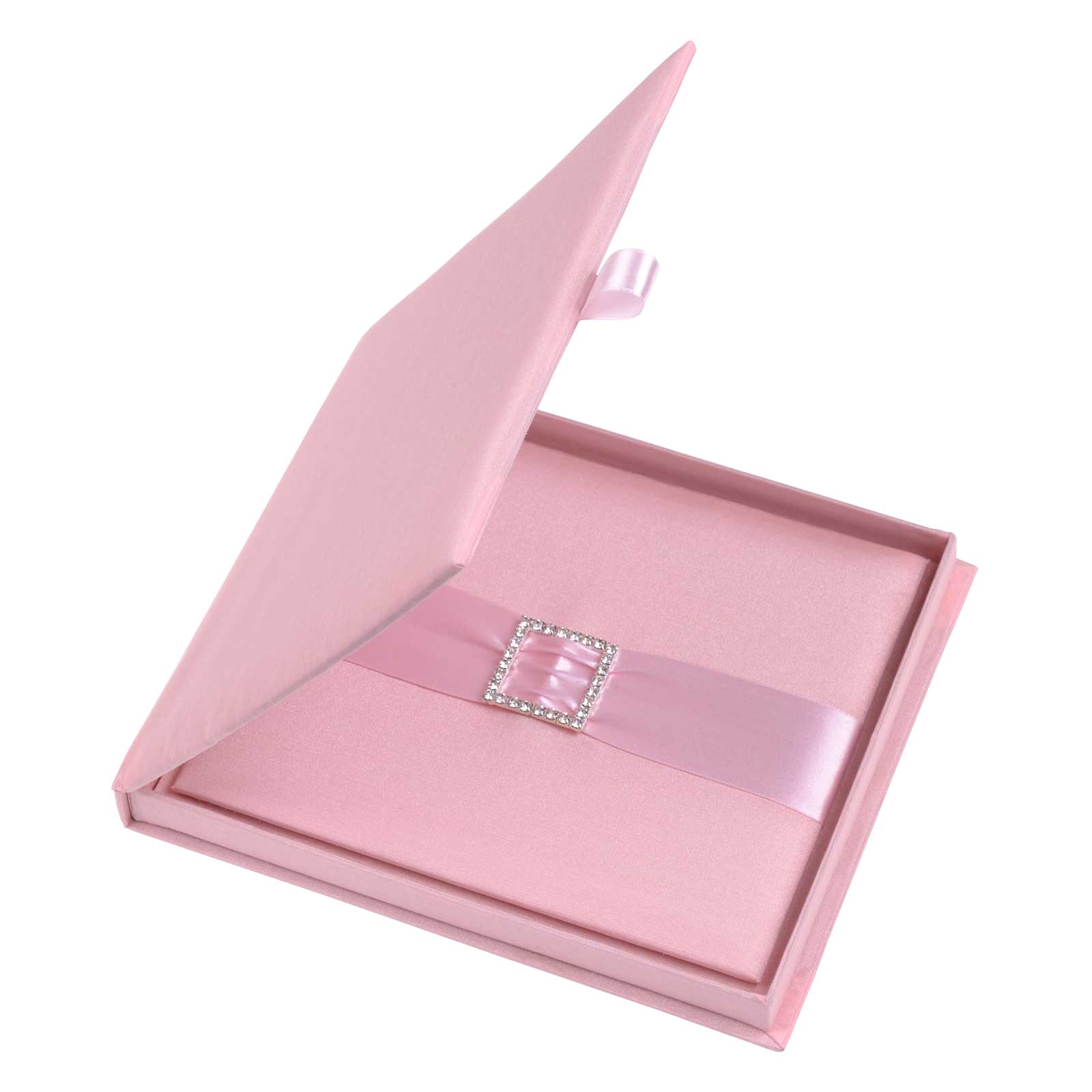
What makes an invitation “boxed”?
The invitation suite is presented inside a box rather than simply held in an envelope or folder. The box can become a keepsake, but the right format still begins with the card, its enclosures and the way you want the recipient to open it.
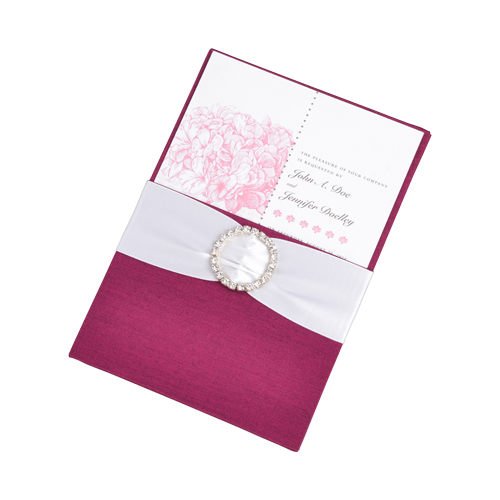
A photographed card shows a presentation possibility. Ask the proposal to specify the box, silk card panel, holders and any stationery or additional items included. Card design, printing and envelopes should never be assumed to be included.
CHOOSE THE CONSTRUCTION
A box or a folio?
A Classic Silk Invitation Box has an optional outside logo and no embellishment choices. An Elegant Embellished Invitation Box has an inside silk card panel with ribbon and jewel choices, plus an optional outside logo. Book and pocket folios offer a slimmer folded presentation; their card fit is confirmed separately.
Compare the four collections →Begin with the complete invitation suite.
Measure the card width and height, then the total thickness of all the pieces together. Include envelopes and enclosure cards if they will sit inside. For a folio, note which pieces need a holder or pocket.
The quoted specification confirms the finished fit. Older photograph codes are useful references, but they are not a substitute for confirmed measurements.
A few useful answers.
Can I review the presentation before production?
Choose a photo proof or a shipped physical proof. Physical-proof shipping is quoted at actual cost and paid together with the final order. Agree the proof process and timing with the atelier.
How do I plan delivery to the United States?
Share the full destination and required arrival date. Production timing, shipping cost and any applicable duties or taxes must be confirmed for your individual order; a photograph does not establish a delivered price.
Think about the moment of opening.
Imagine what the recipient sees first: an outside monogram, a ribbon detail or the invitation itself. A box creates space for this sequence, while a folio presents the stationery through a folded format. Choose the experience you want, then confirm the construction that supports it.
If your stationery is still being designed, share the planned card dimensions and mark them as provisional. Final measurements should reflect the finished suite, including folds, envelopes and raised details. A reference photograph helps describe the atmosphere; measurements establish the fit.
What to ask for in your bespoke proposal.
Identify the collection, preferred opening, silk color reference and optional outside logo. For an embellished box, also describe the ribbon and jewel you like. Include your quantity, required arrival date and destination.
Ask the proposal to list the included items and any separately quoted items. Agree how the card sits inside, which proof method you prefer and how shipping is calculated. A clear written specification is more useful than assuming two similar photographs show exactly the same product.
KEEP EXPLORING
Understand the details.
Have your invitation dimensions ready.
For example, a 5 × 7 inch card measures 12.70 × 17.78 cm; a 4½ × 6½ inch card measures 11.43 × 16.51 cm. These are stationery examples, not guaranteed fits for this photographed product. Confirm the finished card, any mounting mat, envelopes and total suite thickness.
See invitation card sizes and fit guidance →